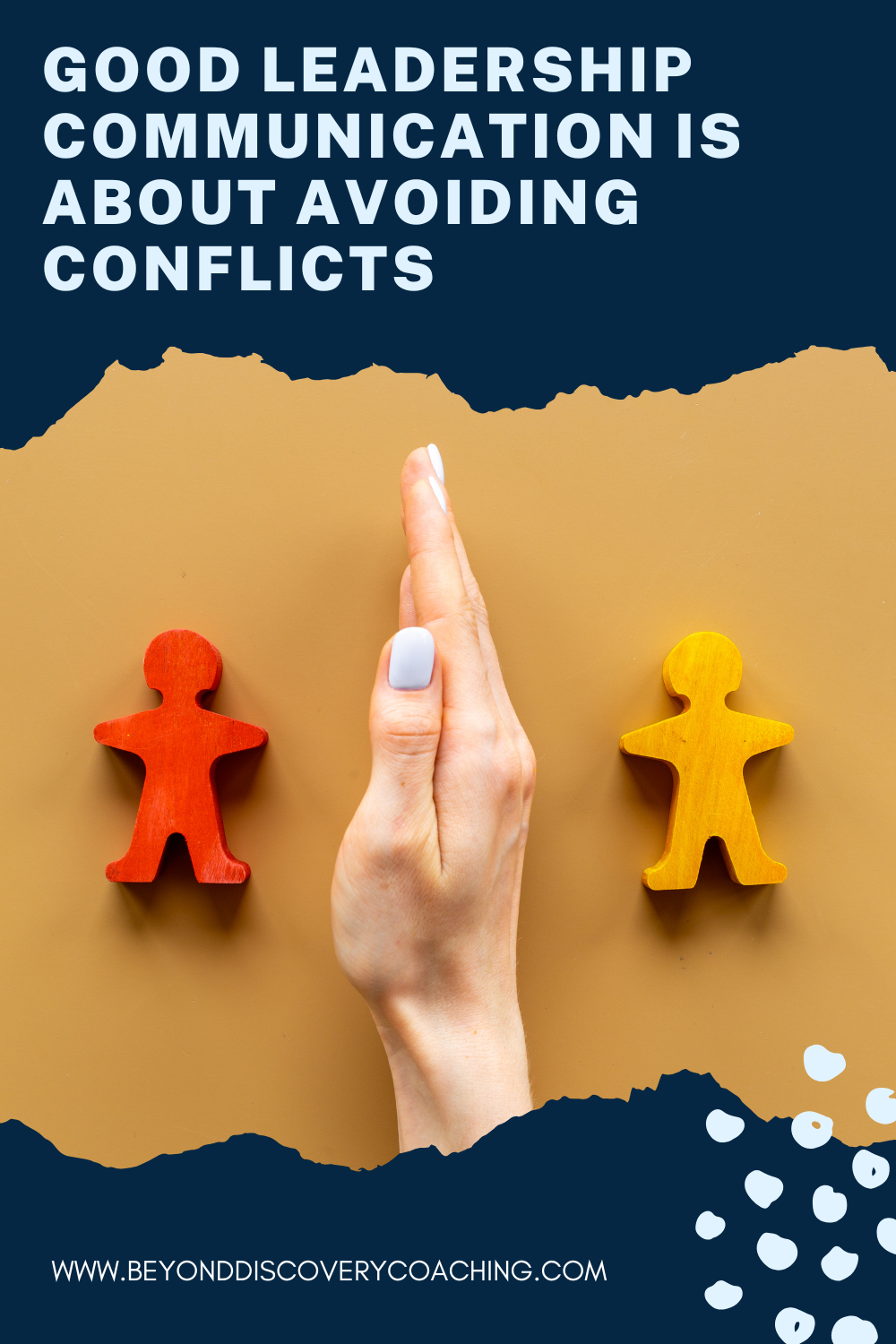
Good Leadership Communication Is About Avoiding Conflicts

Leaders receive plenty of advice about communication, especially when it comes to clarity and frequency. Ultimately, there’s no denying that your teams want to know what is going on, which is why you need to talk to them often and honestly. Being a leader who knows how to embrace transparency ensures your team understands the direction of the business and can stand behind you. Being transparent also means approaching difficult conversations because even if they are uncomfortable, they still need to happen.
But transparency doesn’t prevent workplace conflict. In fact, communication is extremely difficult to manage because a lot of people can interpret a message completely differently even though they’ve heard the same thing. After all, we all carry our previous experiences and individual needs at all times, which can influence how anything that is said to us is going to be interpreted. The role of the leader is not just to be transparent. It is to ensure that they can communicate in a way that reduces the risk of conflict within the business.

#1. Learn How Neurodivergent Employees Communicate
Neurodiversity can be a valuable business asset. Employees who think differently are likely to bring new perspectives, as well as creative problem-solving skills and special knowledge that can help make a difference.
Yet, workplaces often develop around assumed ways of communicating. Leaders typically expect employees to interpret indirect requests, body language, tone, or ambiguous instructions properly. Unfortunately, when you work with a neurodivergent employee, this can create unnecessary misunderstandings and conflicts.
While there is no single neurodivergent communication style, each individual has their own preferences and styles in which they perform better. As a leader, it is important to clarify with your team which communication approach works best for them and what level of clarity they need.
Bringing in the clarity neurodivergent employees require can avoid internal conflicts as well as high turnover rates from people who feel unsupported.

#2. Know How to De-escalate Difficult Situations
No matter how tempting it is to ignore a problem, this can allow frustration to build until a relatively manageable disagreement becomes much harder to resolve.
So, for leaders, this is also about recognizing when tension is increasing and knowing how to respond without escalating it further. De-escalating is a skill, and this is one that you can develop with dedicated training, such as Stand2 resources.
Essentially, you need practical approaches to manage challenging behavior and go-to techniques when things are heating up. While it’s important to appreciate that this skill is typically for “safe” environments, as you wouldn’t de-escalate a conflict in the same way if a situation involves active threats, such as working in a police force.
#3. Use Emotional Intelligence
Strong communication involves more than hearing someone’s words and preparing your response. Leaders also need to consider what the person may actually be trying to communicate, especially because while a leader may have some communication training, this may not be the case for everyone else.
Emotional intelligence is about recognizing what people are saying, even when they are frustrated or struggling. This also ensures that you are not focusing on responding defensively to the point where you react to their emotions instead of addressing the core issue.
Good leadership communication is complex and multi-faceted. But no matter your approach to it, it also needs to involve a good understanding of where conflict appears and how to prevent it. Conflict may not be the result of poor communication, but it can be managed through effective communication.