How to Successfully Change Industries Without Losing Your Momentum

Making a career change isn’t just for early professionals anymore. Whether you’re feeling stagnant, burned out, or simply drawn to new challenges, changing industries can be one of the boldest — and smartest — moves you’ll ever make. But let’s be real: it’s not a leap of faith; it’s a calculated shift.
Mid-career transitions are rising fast, with more people looking for meaning, flexibility, and growth over longevity. The good news? With the right preparation and mindset, you can pivot without starting from scratch.

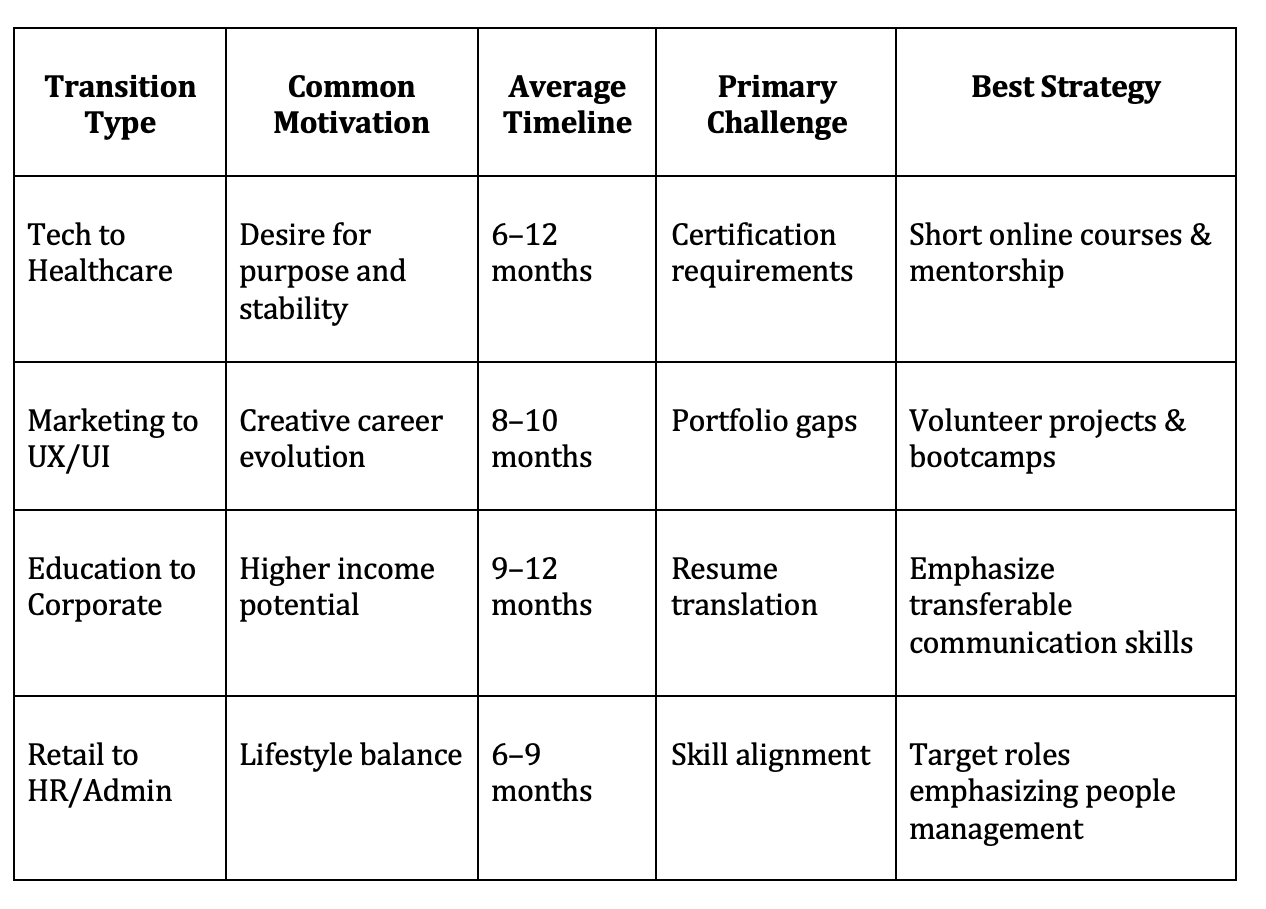
Industry Change by the Numbers

FAQ: Common Questions About Changing Careers
Q: How do I know it’s time to move on?
A: If your energy is consistently low and growth feels impossible, you’re not in a slump — you’re in a mismatch.
Q: Should I take a pay cut?
A: Possibly at first. Many people do for six months to a year, but the long-term trajectory often outweighs the short-term dip.
Q: What’s the first step I should take?
A: Audit your existing skills and see how they fit the new field — websites like O*NET Online can help you identify transferable strengths.
How-To: Build Momentum for a Cross-Industry Leap
Map your transferable skills. Write down your top five abilities that add value across contexts — leadership, communication, data analysis, etc.
Research emerging roles. Tools like LinkedIn Career Explorer help you see where your experience connects to trending jobs.
Reframe your resume. Focus on outcomes, not job titles. For example: “Led a cross-functional team that improved efficiency by 30%.”
Build bridges, not barriers. Attend industry meetups through Meetup.com, or follow thought leaders on Medium.
Start small, move fast. Freelance projects, internships, or volunteer work can test your fit in a new field before you fully transition.
Invest in yourself. Consider online learning through Skillshare.
The Upskill Equation: Education as a Catalyst
In many cases, a smart educational pivot can accelerate your career shift. Earning a business degree can help you develop strategic thinking, decision-making, and problem-solving skills that apply in almost every industry. A business management degree in particular helps you strengthen leadership, operations, and project management expertise — foundational skills that open up new career paths in business and management. Online programs also make it easier to balance your education with full-time work or family commitments, allowing you to learn without losing your current stability.
Product Spotlight: The Portable Productivity Partner
If you’re juggling work, networking, and coursework, the Remarkable 2 tablet is a minimalist’s dream. It helps you take handwritten notes that instantly sync with the cloud, so your ideas, resume drafts, and to-do lists stay with you anywhere — no distractions, no endless notifications.
Quick List: Skills That Transfer Across Industries
Problem-solving
Empathy and emotional intelligence
Team collaboration
Leadership and delegation
Project management
Data literacy
Adaptability and learning agility
Checklist: Is Your Career Change Plan Ready?
You’ve defined your “why” — not just your “what.”
You’ve researched the top skills and certifications for your target field.
You’ve built a LinkedIn profile that emphasizes impact, not job history.
You’ve reached out to at least three professionals in your desired industry.
You’ve planned for a potential 6–12 month adjustment period.
You’ve budgeted for temporary income changes.
You’ve committed to one continuous learning habit each week.
Additional Resources to Explore
Changing industries isn’t about starting over — it’s about evolving forward. You’re not abandoning your experience; you’re reframing it. With a clear plan, a learner’s mindset, and consistent follow-through, your next career can be not just different, but better aligned with who you’ve become.