Filming Studio Essentials: What You Need for a High-Quality Production
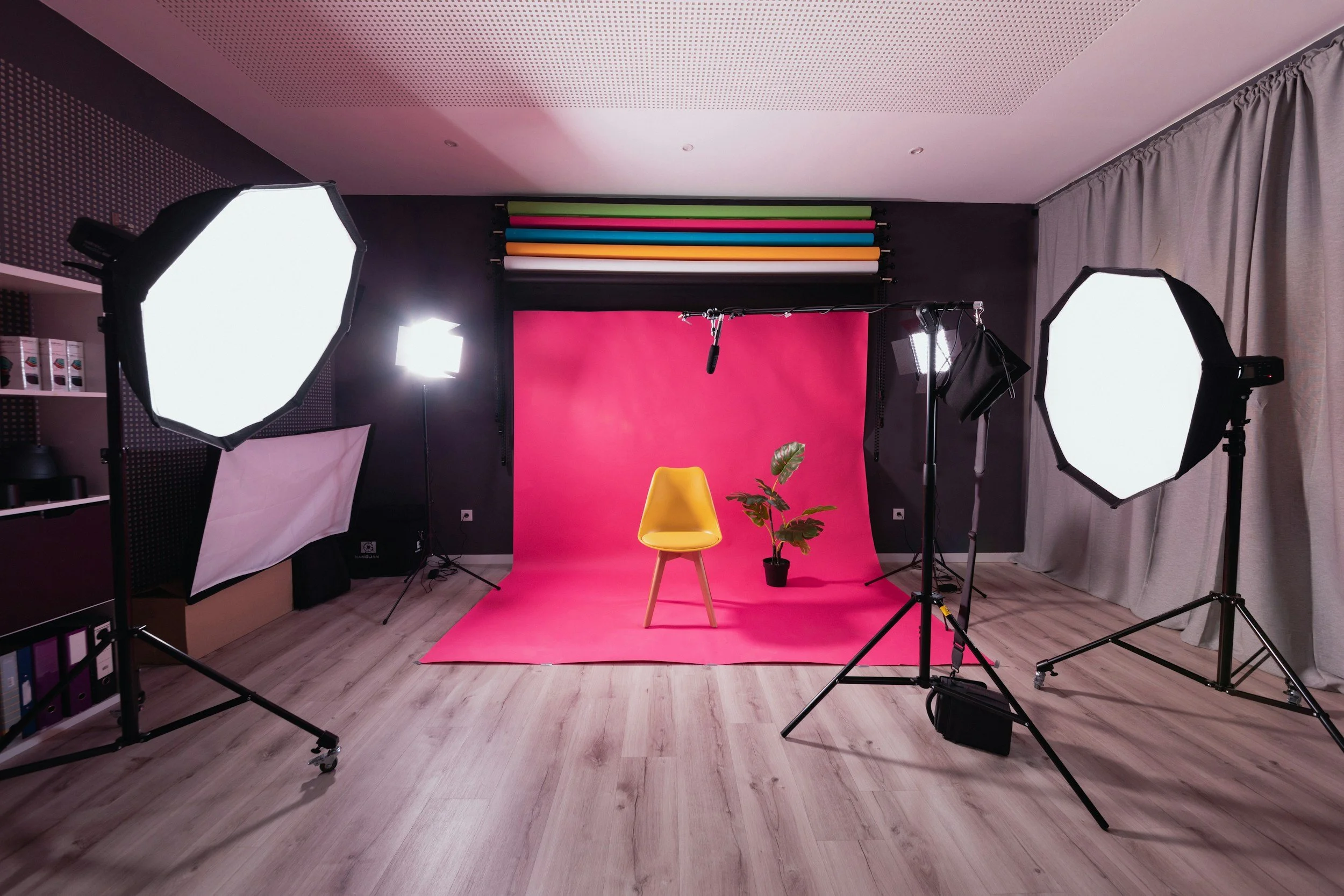
Every great film starts with a creative vision, but how that vision is executed is what separates the amateurs from the artists. If you’re planning on embarking on a creative video project, you owe it to yourself to become familiar with how a professional filming studio production works. Whether you’re going to try to build out a space yourself or you’re searching for an existing studio space to work out of, a grasp of the essentials will help you make the most of your shoot.
With the following taken into account, you can make sure you’re running a high-quality production.

Professional Lighting
Many things go into making a video crisp, clear, and visually legible, but one of the biggest factors is lighting. There’s a lot of thought behind a professional setup, but most productions use some variation of three-point lighting. This requires, as the name implies, three separate sources of light: a key light, a fill light, and a backlight. Your key light is your primary source of illumination, while your fill light helps round out shadows, and the backlight adds dimensionality.
A filming studio should be able to support the power needs of a three-point setup and eliminate external light sources. Utilizing a professional lighting rig will lend your production consistency across takes, as well as open up the full creative potential of your light design.
Sound Control
Sound might not be at the top of your list of filming concerns, but it’s a crucial aspect to nail down. It’s an often underutilized and unsung hero for creating mood and atmosphere. A carefully sculpted soundscape combined with compelling visuals can make a project feel bright and expansive, dark and claustrophobic, or anything in between.
Your sound can also be one of the quickest ways to earn—or lose—your audience’s trust. High-quality sound recording and mixing lend your video a professional polish, while poor sound quality is an extremely fast way to look like you have no idea what you’re doing.
At a filming studio, the space is insulated against ambient sound to prevent contamination. Professional studios also make use of more than one microphone at a time. Usually, you’ll see a lavalier mic on the talent and a shotgun mic attached to a camera or boom. This captures both spoken lines as well as room tone, giving your audio a more dynamic feel. You can also have a backup mic in case one of your mics happens to die or malfunction during a shoot.
Equipment Rental
If you’ve done any amount of research, you know that professional film equipment is expensive. Sure, there are more budget-friendly options on the market today aimed at indie or amateur filmmakers, but even the most affordable DSLR camera can be a sizable investment. This is why you often see productions making use of equipment rentals.
Sometimes a third-party rental company is brought in to supply all the tools; sometimes a studio has its own inventory that filmmakers can rent pieces from. Either way, it takes the burden of a full purchase off an individual production. Equipment rentals allow a company to subsidize the cost of the purchase, giving a production access to a broad range of equipment that it might not otherwise be able to afford. It might seem like a hefty investment up front, but having a full arsenal of tools will go a long way toward producing a polished final product.

Set Features
Your set is your home base and working environment. While there is an allure to shooting on location, and it’s sometimes the best option for a project, working on a controlled studio set is often the safest bet. As we’ve already established, it provides a controlled environment for you to get your work done. No racing against daylight to get your shots in, no outside noise ruining an otherwise perfect take, and no lookie-loos photobombing your shots.
A studio space also offers modularity, allowing you to build out any sets or load in any props you need for the shoot. Even if you’re not planning on building anything big, most studios also offer cloth or painted backdrops designed to create the impression of a large, infinite space behind your subject. This seamless effect is particularly sought after in promotional or commercial projects. Ultimately, what a filming studio offers most is flexibility. By acting as a mutable blank canvas, it affords the people using it creative freedom to do what they need.
Amenities
When trying to make the leap into a professional production, many people focus on all the technical aspects. What can sometimes be forgotten, though, are the little comforts that make a workplace enjoyable. You’ll often see that in addition to their production facilities, filming studios also offer their clients a wide array of various amenities to make their experience more comfortable.
Lightz Out Studios in San Diego, for example, offers a full-service kitchen, air conditioning, dedicated green rooms and changing rooms, and free on-site parking to productions using the space. Some of these things might seem small, but they go a long way toward keeping everyone’s spirits and motivation high. When your cast and crew have their creature comforts fulfilled, you’ll naturally end up with a more productive shoot day.
Your final product will be, in large part, a product of the environment you make it in. It might be intimidating at first, especially if you’re coming in from outside the film industry, but filming in a studio is easier than you might think. With the right equipment, space, and facilities, you’ll be well on your way to making an environment suited for high-quality professional productions. Whether you’re trying it on your own or renting a filming studio, you can have faith the final product will be a great one.